
The road outside got relaid again this year. Then the first heavy rain came, and the water that used to stay in the gutter walked straight in through your front door.
If you live in a house below road level, you know the drill. Buckets, old towels, the sofa up on bricks.
It isn’t bad luck, and most of the time it isn’t your builder’s fault either. In most Indian towns, a road gets re-carpeted by pouring fresh tar or concrete straight over the old surface. Nobody scrapes the old layer off. So the road gains a few inches every time, and your plinth stays exactly where it was. In Tamil Nadu, the civic group Arappor Iyakkam collected 245 such locations from volunteers in a single 2026 survey, and some families reportedly spent up to ₹40 lakh just raising their floors (DT Next).
So what are your options, really? There are six that people usually try for a house below road level. Some of them help. Some just move the problem around.
The short version: drainage work and flood boards are fine if water gets in once in a while. If your house below road level floods every single monsoon, they’re a stopgap. The fixes that actually last are raising the floor inside, rebuilding, or lifting the whole house, and if the structure is sound, lifting usually saves the most of what you’ve already paid for.

Why Is My House Below Road Level?
Mostly it’s the road. Resurfacing without milling (scraping off the old layer first) adds height every single time, and after a few rounds that’s one step down to your door. Then two.
It happens slowly enough that most families only notice once the water starts coming in. By then the house below road level is a problem every single monsoon.
Other things pile on. Drains and footpaths get rebuilt higher. The new house next door goes up on a tall plinth and tips its rainwater onto your side. And a lot of older homes were simply built low to begin with, for the street as it was thirty years ago.
People are starting to push back. In Panchkula, a residents’ welfare association asked the authorities to make road peeling compulsory before re-carpeting, because roads had crept almost up to the damp-proof course of older houses (The Tribune). Good for the next round of road work. It doesn’t do anything about the height that’s already there, though.
How Bad Is It to Live in a House Below Road Level?
Annoying at first. Expensive later.
- Rainwater comes in, and in a bad storm, sewage too.
- The bottom of the walls never quite dries. Plaster flakes off and those white salt patches show up.
- Water sitting around the base softens the soil under the footings. That’s how cracks start, or one side settles.
- Getting in and out gets harder. Ask anyone pushing a scooter up the slope, or helping an elderly parent down the step.
- Buyers spot a house below road level the moment they walk up, and it can drag the price down.
6 Solutions for a House Below Road Level, Compared
Roughly cheapest first, most permanent last.
1. Flood barriers at the doors
Removable boards that slot across the door and the gate. Cheap, quick, and they do work against shallow water. But somebody has to put them up before every heavy shower (usually at night, usually in the rain), water still comes up through the drains, and the level hasn’t changed one bit.
2. Better drainage, a backflow valve and a sump
Ever had the bathroom drain bubble up during a storm? A non-return valve on the outlet stops that. Then there’s the sump, a small pit with a pump that throws out whatever water pools around the house. Any low-lying home should probably have both. Neither changes the level, though, and a pump that dies in a power cut is no use to you at 2 a.m. in July.
3. Asking the municipality to mill the road
Round up the neighbours and ask the corporation to strip the old layers before the next resurfacing. For the street, it’s the right long-term answer, and it stops things getting worse. It’s also slow, completely out of your hands, and it won’t bring an already-raised road back down.
4. Raising the floor inside
The usual quick fix. Fill the floor, lay new tiles a foot higher, done.
Then you notice the ceiling’s a foot closer. The doors don’t fit anymore. Switchboards, windows and the kitchen platform all sit at odd heights now. Outside, the plinth is still low. And next time the road goes up, you’ve got less height left to give.
5. Demolishing and rebuilding
You get a brand-new house at the right level, laid out the way you want. You also get the biggest bill, the longest wait, a mountain of malba, fresh approvals and very likely months of rent somewhere else. If the old structure is still sound, that’s a lot to throw away.
6. Lifting the whole house
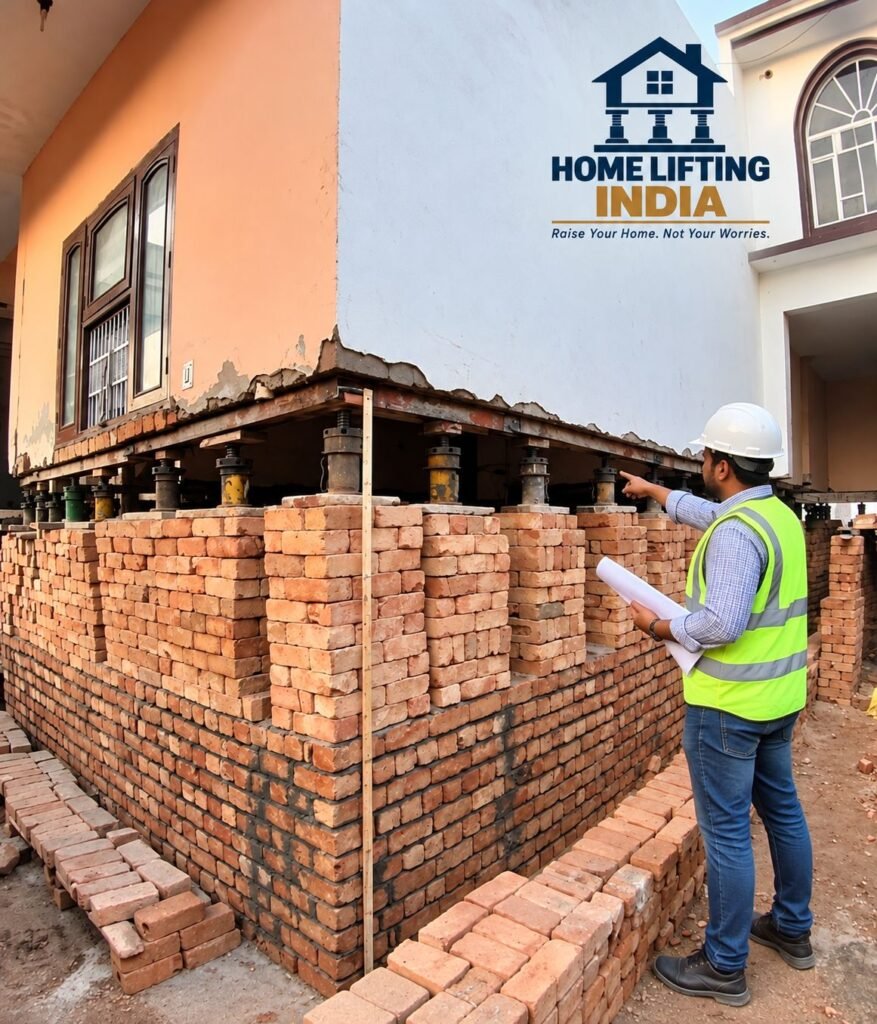
Here the whole building goes up. It’s raised on jacks (here’s how house lifting by jack works), a new or strengthened base is built underneath, and it comes to rest at the new height with every room exactly as it was. At Home Lifting India we use Manual Screw Jack Technology, so the house rises a little at a time and the levels get checked at every stage. Plinth, floor and rooms all end up above the road together.
It does need a proper structural assessment first. Not every building qualifies.
“I had a 40-year-old ancestral house that needed lifting due to road level rise. Naveen Sir’s team used Manual Screw Jack Technology and lifted it 3 feet without a single crack.”
Suresh Patel, Ahmedabad
Quick comparison
Side by side, for a typical house below road level:
| Option | Fixes the level? | Keeps room height? | Disruption | Good for |
|---|---|---|---|---|
| Flood barriers | No | Yes | Low | Occasional shallow water |
| Drainage, backflow valve, sump | No | Yes | Low | Sewage backflow, small runoff |
| Road milling request | Stops it getting worse | Yes | None for you | Long-term fix for the street |
| Raising the floor inside | Partly (inside only) | No | Medium | Small gap, high ceilings |
| Demolish and rebuild | Yes | Yes (new design) | Very high | Weak or unsafe buildings |
| House lifting | Yes | Yes | Medium | Sound buildings you want to keep |
When Is House Lifting the Right Fix for a House Below Road Level?
Worth a serious look if most of this sounds like you:
- water gets in every monsoon, not once in five years
- the building’s sound, or can be repaired, with no major structural damage
- you want to stay put and keep your layout and finishes
- there’s no ceiling height left to give up
- the road outside will probably be resurfaced again (it usually is)
- you’d like some room underneath too, say for stilt parking
If the house has also tilted or settled on one side, house leveling can be done in the same project. A weak base gets foundation strengthening. Apartment blocks and other multi-storey buildings come under building lifting.
When Lifting Is the Wrong Choice
We’d rather tell you straight than sell you the wrong fix. Lifting isn’t right for every house below road level, and we’ll say so. Serious structural damage that isn’t worth repairing? A small gap that proper drainage would sort out? Already planning to rebuild? Then lifting may not make sense. The site assessment settles it before you spend anything on the actual work.
How Much Should a House Below Road Level Be Raised?
There isn’t a standard number. We work it out after a level survey.
Start with today’s gap between the road and your plinth. Add a margin for the next few resurfacings, because there will be more. Leave enough fall for rainwater to run away from the house, not towards it. Then think about the steps and the gate at the entrance, and any extra height you want underneath for parking.
What Does It Cost to Fix a House Below Road Level?
Compare the options for a house below road level by what they actually fix, not just by the first bill.
With lifting, two things drive most of the price: how much house there is (all floors added up) and how high it has to go. After that it’s the details of your building and your lane. Want a ballpark? Try the house lifting cost calculator. The real number comes after we’ve seen the site.
The other options have costs that only show up later. Raise the floor and you’re redoing doors, electrical points and often the kitchen. Rebuild and you’re paying for demolition, approvals and quite possibly months of rent.
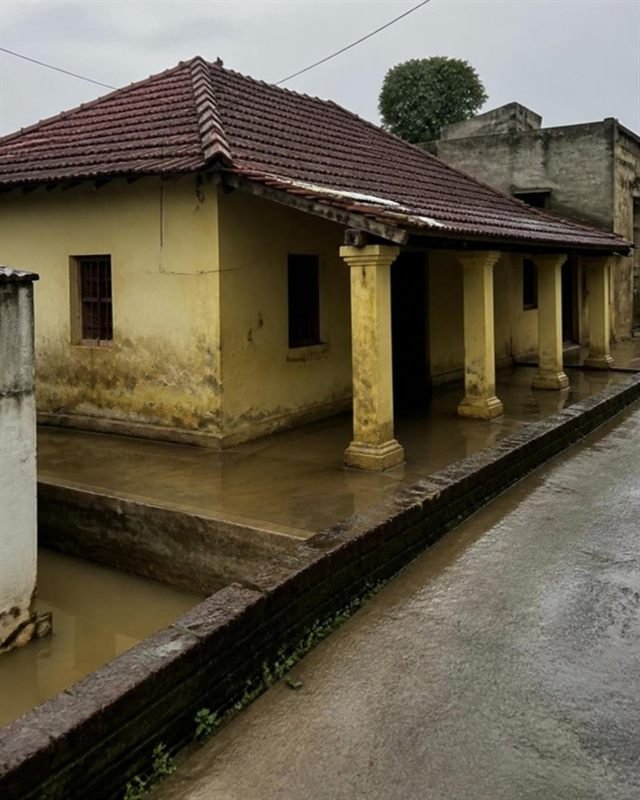
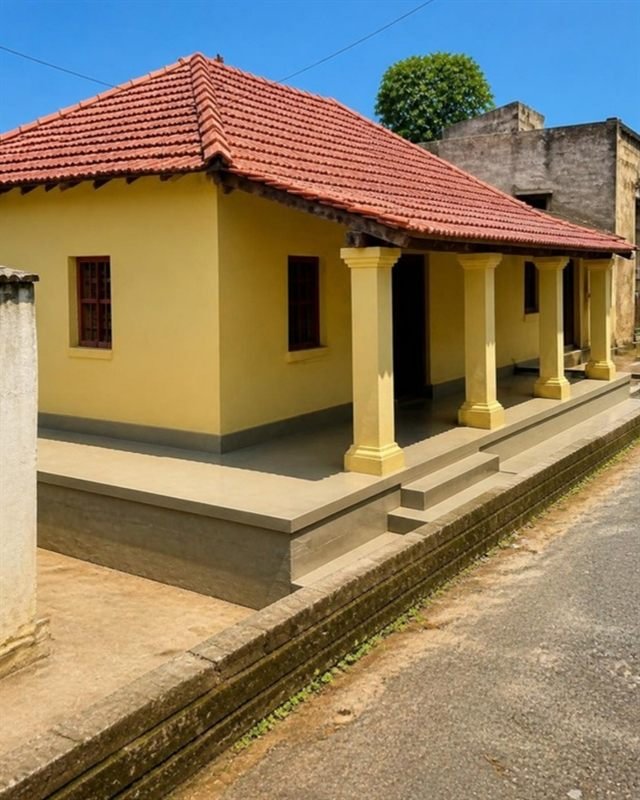
These are illustrations, not photos of a real job.
Common Mistakes With a House Below Road Level
Raising the floor again, and again. It’s the classic house below road level mistake. Each round costs money and takes more ceiling, while the outside stays low.
Waiting for the road to come down is another one. Once a road has gone up, it practically never comes back down.
Then there’s starting work without a structural check, or picking whoever quotes lowest. Before you hire anyone, ask how they’ll lift the house, who checks the structure first, and how they’ll watch the levels while it goes up.
Plan It Before the Next Monsoon
Lifting and foundation work go best in dry weather. The ground’s firm, and fresh concrete cures properly.
The assessment, the planning and the new base all take time as well. So if your house below road level took water this monsoon, the dry months coming up are your window. Get it assessed and scheduled, and the house can be above the road before the rains are back.
What to Do Next
- Measure the drop. Grab a measuring tape, go to the main door and see how far down your floor is from the road.
- Photos. Click a few on your phone. Get the road in the frame first, then the entrance, the floor just inside, and any cracks or damp patches you’ve noticed.
- WhatsApp them to us. We’ll tell you which fix suits your house below road level, and what the next step would be.
Have a House Below Road Level? Get a Free Quote
Send the photos, your location and the number of floors. We’ll look at them and tell you honestly what will work, well before the next monsoon.
Questions We Get Asked
Flood boards, a backflow valve and better drainage cut down the water, but the level stays the same. The fixes that last are raising the floor inside, rebuilding, or lifting the whole house. If the building is sound, lifting keeps the structure and every room at full height.
Mostly, yes. The rain is only part of it. Damp walls, a tricky entrance and a lower resale price come along too, and water standing around the base can weaken the soil under the foundation over time, and the repairs keep adding up the longer it goes on.
Often, yes. It goes up on jacks, a new or strengthened base is built under it, and it’s set down at the new level, as long as the structural assessment is fine. Here’s how our house lifting services work.
It’s quicker. But you lose ceiling height, the doors, windows and switchboards end up at the wrong level, and the plinth outside stays low. Lifting takes the whole building up, so inside, nothing changes.
In Vastu tradition, a house lower than the road is generally seen as unfavourable, and some owners lift partly for that reason. For the Vastu side, talk to your Vastu consultant. We handle the engineering.
Depends on the building’s size, the floors, how high it’s going and the site. You’ll get a timeline from us after the site inspection.
अगर हर बारिश में पानी घर में आता है, तो फ्लड बैरियर या नाली ठीक करवाना सिर्फ़ कुछ समय की राहत है। स्थायी हल तीन हैं: अंदर का फ़र्श ऊँचा करना, घर तोड़कर दोबारा बनाना, या पूरे घर को जैक से ऊपर उठाना। अगर ढांचा मज़बूत है, तो हाउस लिफ्टिंग से पूरा घर बिना तोड़े सड़क से ऊपर आ जाता है। अपने घर की 4-5 फ़ोटो WhatsApp पर भेजिए, हम सही रास्ता बताएंगे।
Planning to lift your house? Talk to us first.